
|
|
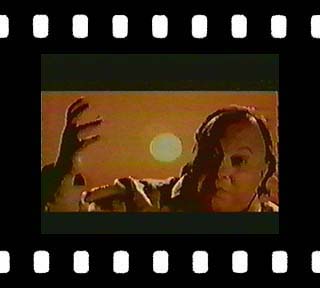 Nusrat Fateh
Ali Khan, considered the greatest living singer of qawwali, a Sufi Muslim
devotional music, found himself at centre stage in the U.S. entertainment
business in 1996. He recorded songs for movie soundtracks (most notably a duet
with Eddie Vedder of Pearl Jam for the film Dead Man Walking), appeared on MTV,
and recorded secular songs that appealed specifically to Western audiences. All
this might have seemed like a betrayal of the spiritual heritage that gave rise
to the music and of the admiring millions in his native Pakistan, but Khan
maintained that he had given up nothing and was only exploring the depths of his
voice. He had been eager to share his talent and musical heritage with broader
audiences, yet he had also been careful to move slowly and not compromise his
beliefs.
Nusrat Fateh
Ali Khan, considered the greatest living singer of qawwali, a Sufi Muslim
devotional music, found himself at centre stage in the U.S. entertainment
business in 1996. He recorded songs for movie soundtracks (most notably a duet
with Eddie Vedder of Pearl Jam for the film Dead Man Walking), appeared on MTV,
and recorded secular songs that appealed specifically to Western audiences. All
this might have seemed like a betrayal of the spiritual heritage that gave rise
to the music and of the admiring millions in his native Pakistan, but Khan
maintained that he had given up nothing and was only exploring the depths of his
voice. He had been eager to share his talent and musical heritage with broader
audiences, yet he had also been careful to move slowly and not compromise his
beliefs.
Khan was born Oct. 13, 1948, in Lyallpur (now Faisalabad), Pak. His father, Ustad Fateh Ali Khan, and two of his uncles were famous qawwals who sang in the classical form. Nusrat received music lessons from his father but did not devote himself to the qawwali tradition until he sang at his father's funeral in 1964. Two years later he gave his first public performance, singing with his uncles. By the early 1970s he had established himself throughout Pakistan as the outstanding qawwal of his time. After he sang in 1985 at a world music concert in the U.K., word of his talent began to spread, and he was soon performing regularly throughout Europe. He first toured the U.S. in 1989 and in 1992 spent a year as artist in residence at the University of Washington. Qawwali music began in Persia in the 12th century. It is characterized by simple melodies, forceful rhythms, and wild improvisations intended to stir the audience into a euphoric state. The music is based upon medieval Sufi poems that often express deep religious faith through images of romantic love. The qawwal memorizes these poems, and he (qawwals are traditionally male) then uses phrases and passages from different poems to create a new expression or idea. The performances, traditionally held in shrines, are marked by passionate shouting and dancing. As in American gospel music, qawwali uses repetition and a series of emotional peaks and rests to intoxicate the audience.
Usually accompanied by tabla (small hand drums), harmoniums, and backing vocals, Khan sang in a very high register (a family trademark) and had a powerful and highly expressive voice. Perhaps his most exceptional qualities were his melodic creativity and legendary stamina. He had been known to perform for 10 hours, though by 1996 diabetes and age had drained some of his energy. Despite his success in the West, Khan continued to live in Lahore, Pak., and to perform regularly in his homeland.

